Navigate to program

Programme

Menu

Navigate to ticket purchase

Ticket

Exhibition
Activities
Nature

OUT IN NATURE

Amazing fossils on
Møns Klint

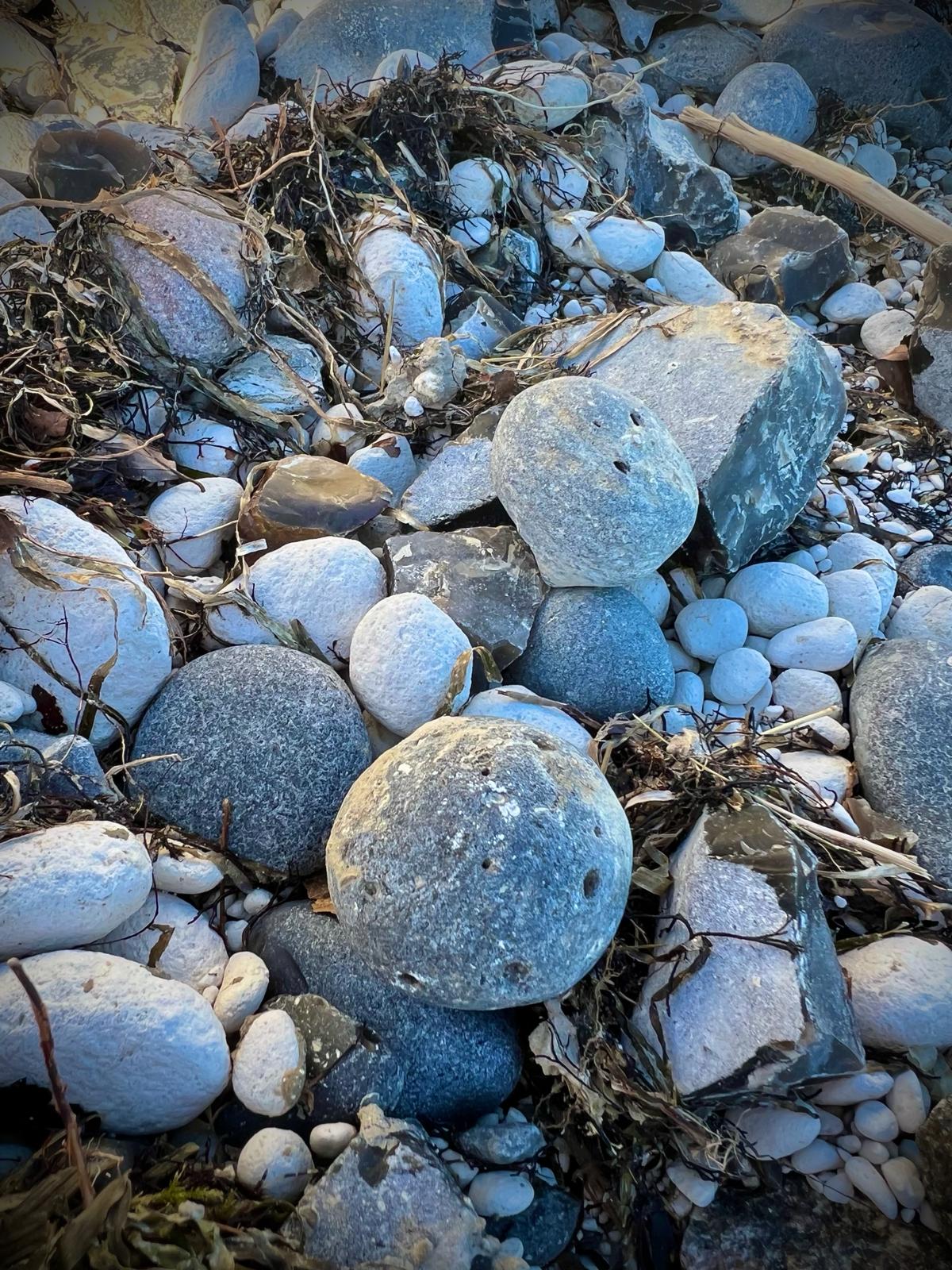
Take a walk along the beach at Møns Klint and find your very own DKK 70 million. years old fossil.

70 million years ago, Northern Europe was covered by a large sea, which we call the “Cretaceous Sea”.

Microscopic algae with calcareous shells lived in the sea in large numbers. The shells of dead algae were deposited on the seabed. Over time, they stuck together and became chalk. Many millions of years later, glaciers pushed the chalk together: Huge flakes of chalk slid over each other and formed Møns Klint.

During the Cretaceous period, a wide variety of animals and plants lived. Today, the now extinct animals can be found as fossils on the beach. Go on a fossil hunt yourself and look for the remains of exciting prehistoric animals.

If you want to get even more out of your fossil hunt, join GeoCenter's guides on a guided trip to the beach. The guided fossil hunts are held during holidays and high season.

Read more here: https://moensklint.dk/fossiljagt/

Mantis, sea urchins, giant oysters, sea sponges and burrows are some of the most common fossils.

Belemnite fossils

Belemnites are fossils of belemnite squids that were widespread in the warm Cretaceous Sea. The elongated cigar-shaped fossils that are so abundant at the water's edge at Møns Klint, was a limestone spike in the animal's back body, and is therefore not – as some believe – the fossilized arms of the octopus.

Sea urchin

Sea urchins were probably abundant on the seabed in the Cretaceous period – but not all of them have become fossils. A fossilized sea urchin is usually shaped like a hemisphere with a pattern on it. Straight rows of dots are a good characteristic – these are traces of the many suckers that were between the spines. At the bottom there will be a hole where the mouth was.

A fossilized sea urchin is actually a cast of the interior of the shell, which – after the innards had rotted away – was filled with a hard material. If the fossil has been out in the sea, the shell is often worn away.

In the gravel on the beach you can find pieces of shells and sea urchin spines.

Giant oysters

Fossilized shells of the oyster species “Pycnodonte vesicularis” are part of it – they are solid and can withstand a trip to the sea.

When the oyster was alive, its shell was full of cavities. It made it so light that it almost floated on top of the soft chalk mud on the bottom. It is believed that this way it avoided getting too much mud in it.

Sea sponges

Sea sponges have nothing to do with the mushrooms on the forest floor – they are primitive animals. Most sea sponges you can find Møns Klint, once had a skeleton made of silica. It is probably silica from dissolved fungi that is the raw material for flint.

The “diatomaceous earth” can be funnel-shaped, club-shaped, cucumber-shaped – or spherical like the cores of the particularly sought-after rattle stones. They often contain a lot of flint, but also something that resembles concrete.

In addition, you can sometimes find small calcareous sponges, which can be recognized by their spherical shape and completely white color. Seen under a magnifying glass, they resemble golf balls. They are also known as “Mønske pearls”.

mosasaur

Mosasaurs were large marine lizards – not dinosaurs – but rather a relative of modern-day monitor lizards and snakes.

There were different species. The largest could grow up to 17 meters long. They were fearsome predators that could open their mouths wide and thus swallow very large prey. They also had specialized palatal teeth located in their palates that could help hold the prey while it was going down their throats.

Mosasaur teeth are an extremely rare find, and only a small handful of them have been found in total. Møns Klint.

Single coral

The individual corals resemble white or black Santa hats with grooves. If you look down into them, you can often see a pattern that resembles a bicycle wheel seen from the side.

When the corals were alive, they stood alone on the seabed with their tips pointing downwards. From the top protruded long tentacles that caught plankton. Only their “houses” are left – the rest has rotted away.

Giant clam

Mussels of the genus “Inoceramus” are often large. That is why we call our specimens giant mussels.

It is extremely rare to find a whole shell, but larger pieces are easy to find. The shells are thick and wavy. They often lie in pieces on the beach and can be recognized by their thickness and light gray color.

Ball flint

The spherical flint stone is of course spherical flint. Most of them have a round, fossilized sea sponge inside. A sign of sponge in the stone are small round holes. It is believed that these are holes from the roots of the sponge, which often went out to the side and not just downwards.

If the mushroom is loose inside, you are lucky to have found a RAST STONE – they are quite rare.

Water lilies

These relatives of sea urchins and starfish simply look like flowers on the sea floor.

The “petals” are tentacles that carry plankton down to the mouth in the middle.

If you look in the washed-up gravel on the beach, you can find pieces of the “stem”. These are small, light-colored discs, 3 – 5 mm in size. The discs can be round, pentagonal and star-shaped.

Sometimes you can be lucky enough to find a stack of discs that are still attached. Unfortunately, other parts of water lilies are rarely found on the Møns Klint.

Armfoot

A brachiopod looks a lot like a clam, but belongs to a completely different animal order. If you find a complete shell, you can see the difference: A brachiopod has a curved “beak” sticking out. Sometimes with a hole in it for the “foot”.

The size ranges from 2 mm to almost 10 cm. They are often light in color, but can be cast in black flint.

Beach shells

Shells from various benthic animals can be found – often broken. They are brightly colored. Certain characteristics can tell us about the type:

Sea urchin: Rows of holes from suction cups or knobs, where there were spikes and a rounded shape.

Arm foot/clam: resembles modern pieces of seashells with or without pattern.

Oyster: Made up of very thin layers (however, the bottom of a sea urchin can also be layered).

Diggings

Flint was originally liquid silica, which flowed into cracks and cavities on the seabed and slowly turned into stone. If the holes were tunnels dug by animals in the seabed, this would create a cast of the animals' bodies.
walkway systems. When they fall down in a landslide, they naturally break.

We estimate that virtually all cylindrical, elongated pieces of black flint are pieces of burrows – and thus trace fossils. They can be found in thicknesses from less than 1 cm to just over 10 cm.

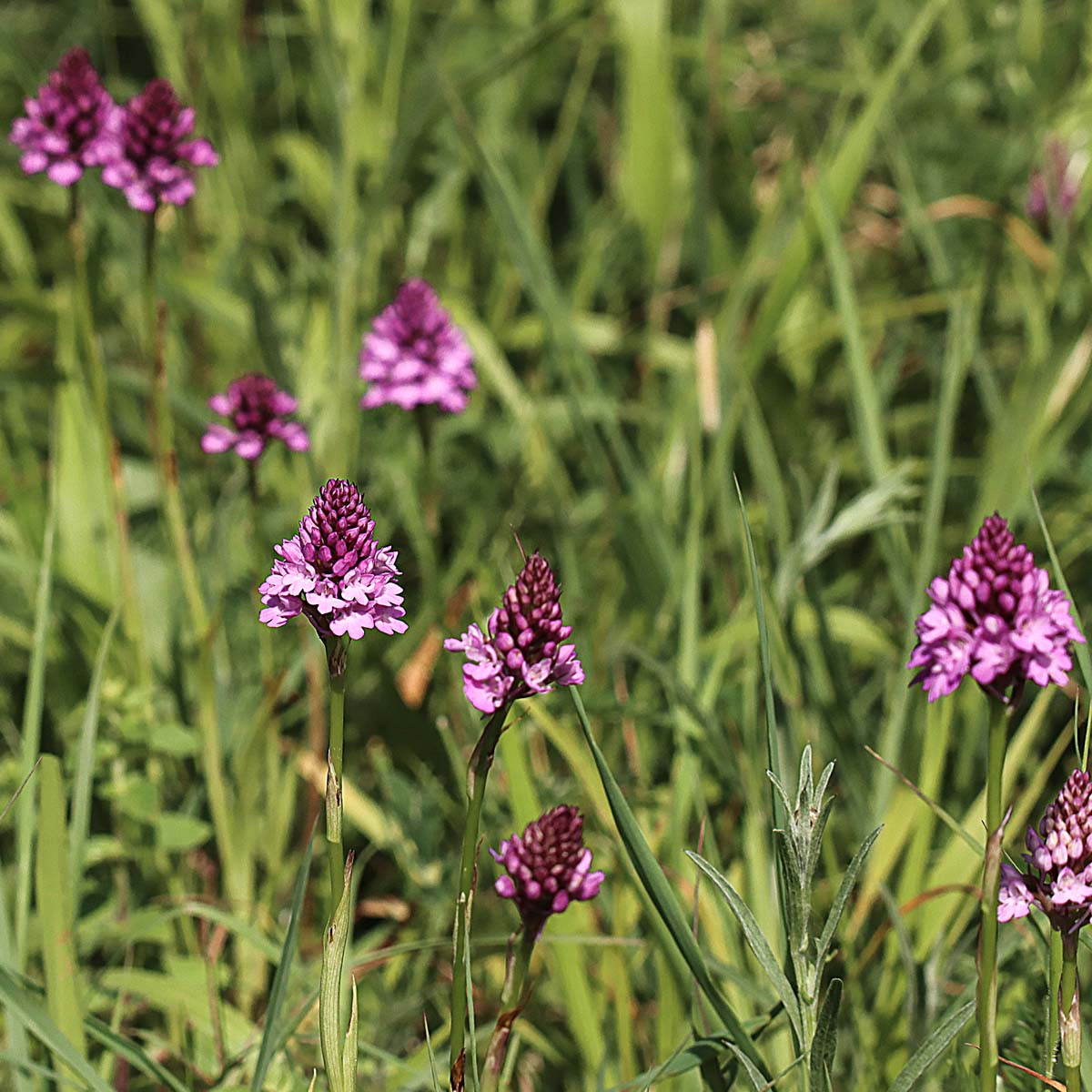
18 different
orchid species

See more

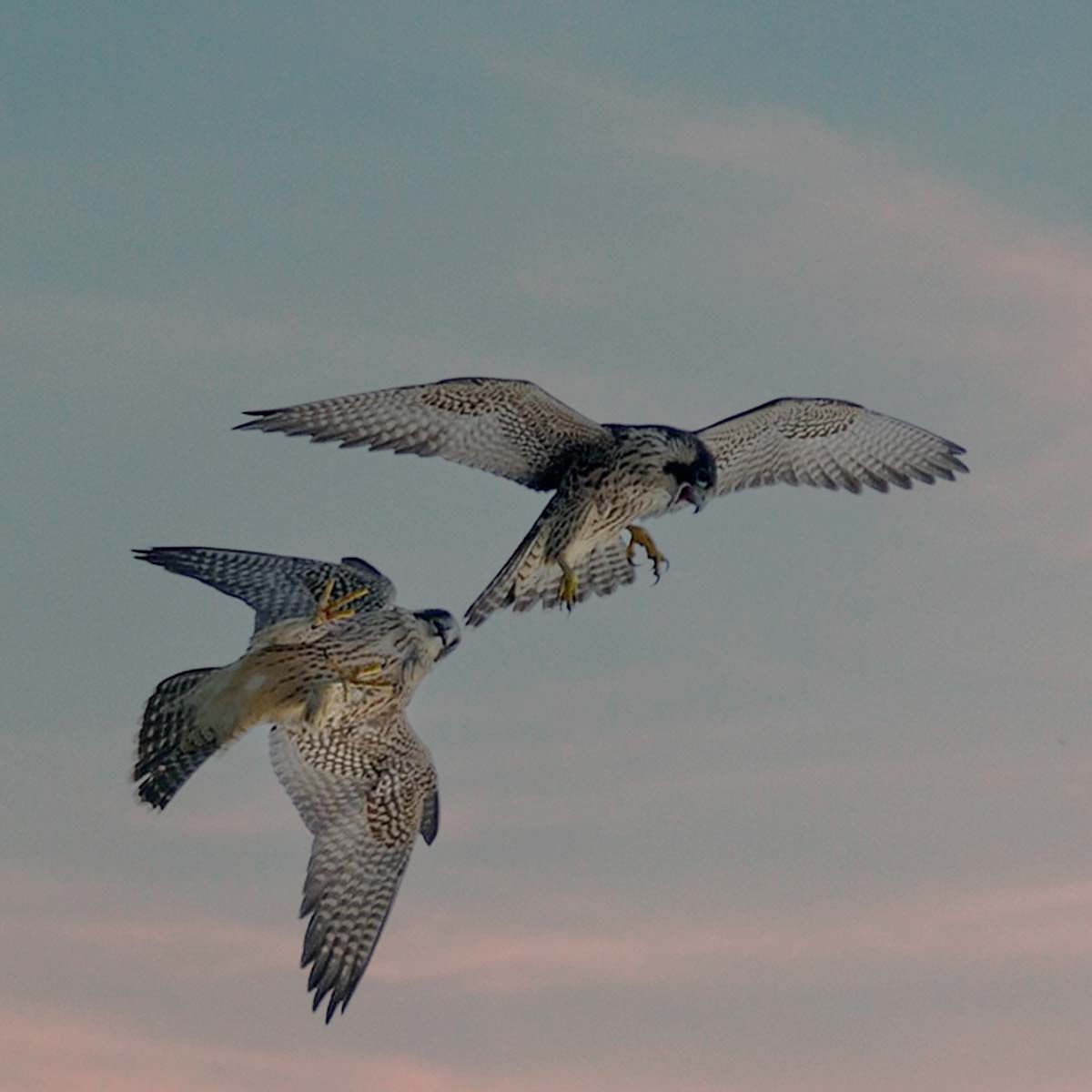
The mighty peregrine falcon

See more

The
black-spotted
bluebird

See more

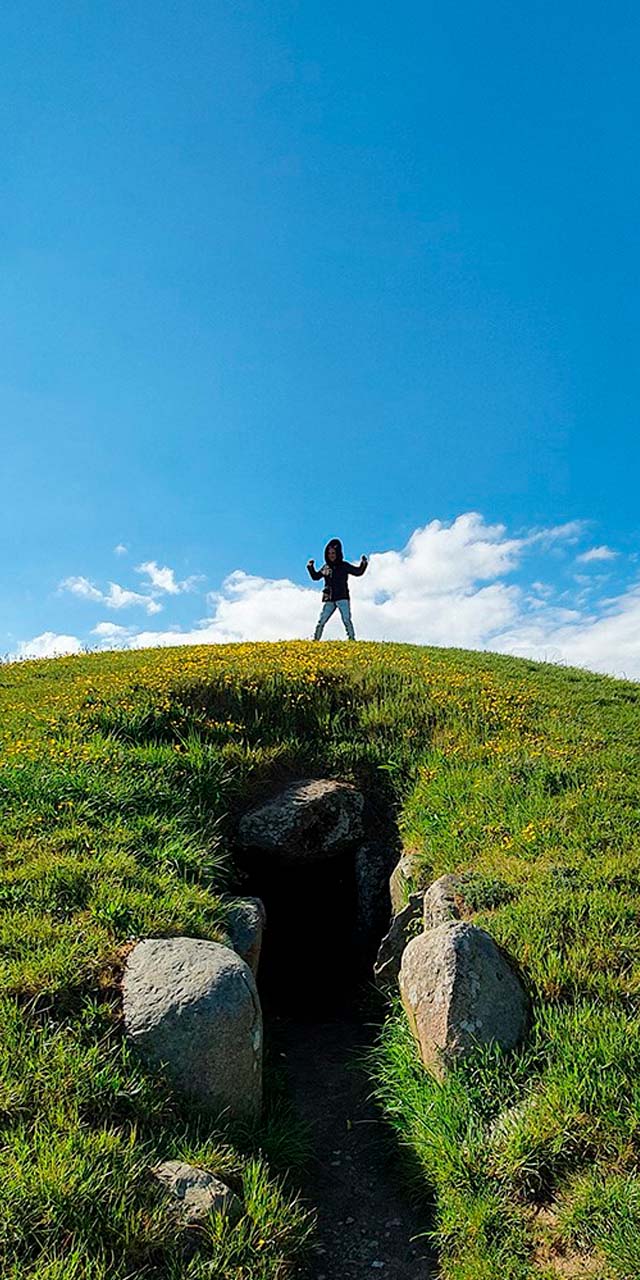
Historical burial mounds

See more

Find 70 million year old fossils along the coast

See more

Rare
arter

See more

In the middle of the unique
Cliff forest

See more

18 different
orchid species

The
black-spotted
bluebird

Historical burial mounds

In the middle of the unique
Cliff forest

The mighty peregrine falcon

Find 70 million year old fossils along the coast

Rare
arter

HIKING ROUTES

… Lace up your hiking boots and experience four of the most beautiful and unique hiking routes

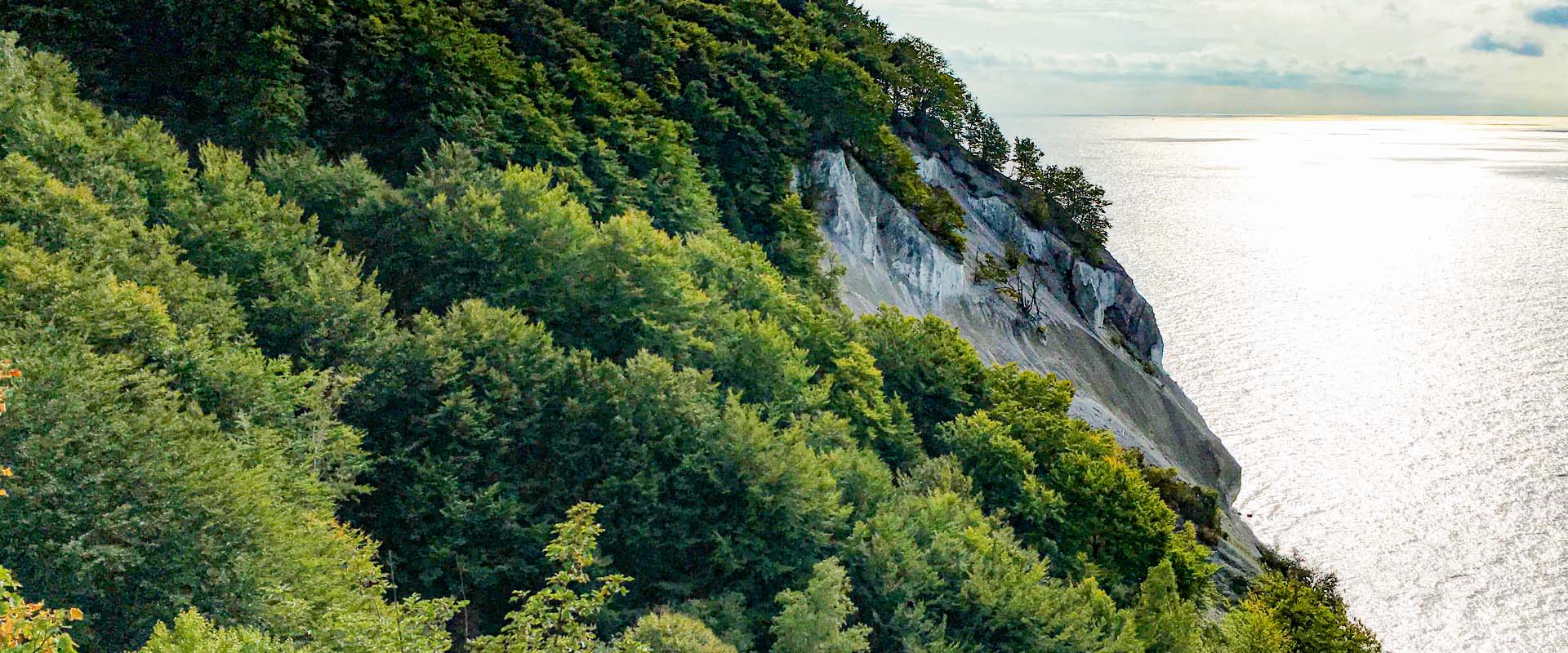
The hilly area around Møns Klint is perfect for hiking in the beautiful, wild nature. Klinteskoven's path systems offer both dramatic views from the edge of the cliff, as well as 'the deep quiet of the forest'. . […]

See more

DARK CLOUD

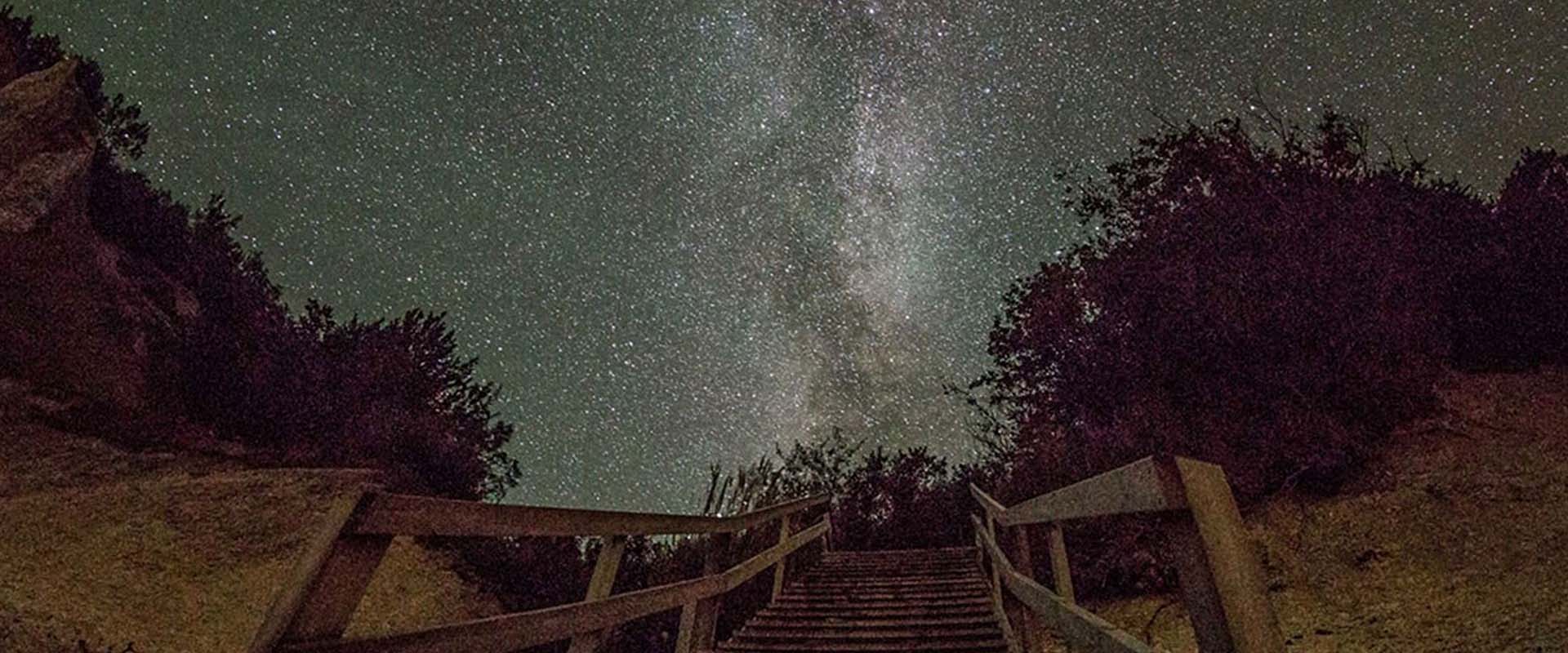
… Experience the magical Milky Way in the night sky above Møns Klint

On Møns Klint you can experience a night sky with thousands of twinkling stars, planets and galaxies. A magical experience! […]

See more

VISIT THE UNESCO BIOSPHERE

Møn has been designated as Denmark's first UNESCO Biosphere Reserve.

With the designation, it is recognized that Møn and the surrounding islands are world-class nature and have a rare wealth of particularly vulnerable animal and plant species, which are included in national and international lists of endangered species. […]

See more

JOIN OUR
GUIDED TOURS IN THE CENTRE

Listen to the guides' wild stories - or book your own tour!

SEE MORE